
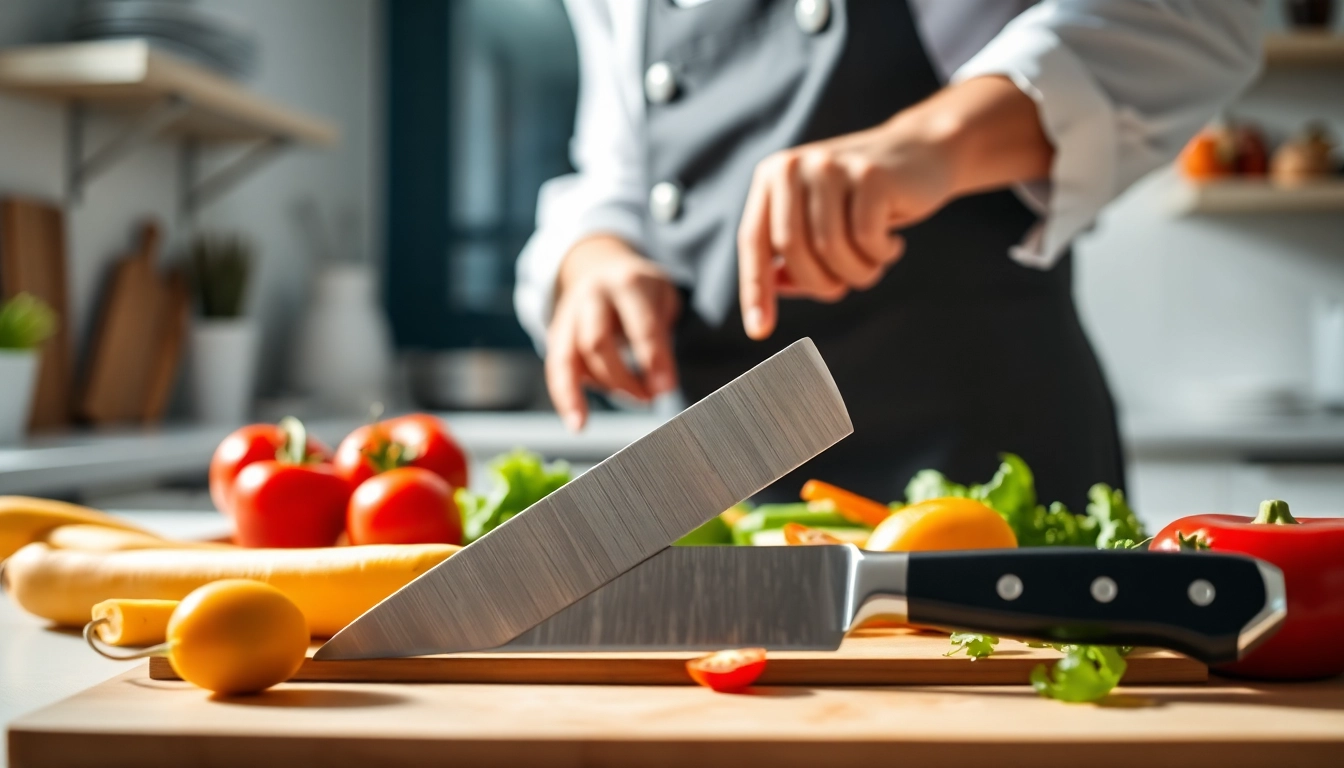
Understanding Chef Knives
What is a Chef’s Knife?
A chef’s knife is a versatile kitchen tool commonly used by chefs and home cooks alike. It typically features a broad, tapered blade that allows for a variety of cutting techniques, including chopping, slicing, and dicing. This all-purpose knife is an essential component of any kitchen, enabling efficient food preparation. A good chef’s knife can significantly enhance your cooking experience and improve the quality of your dishes. For insights on how to choose a chef’s knife, the following sections delve into key characteristics and selection criteria.
Common Types of Chef Knives
There are several types of chef knives available, each designed for specific tasks and culinary styles. Here are a few common types:
- Western Chef Knife: Characterized by a broad blade and curved edge, the Western chef knife is versatile and suitable for a variety of tasks, from chopping vegetables to slicing meat.
- Japanese Chef Knife: These knives often feature a thinner blade with a sharper edge, allowing for precision slicing. The Santoku knife is a popular style of Japanese chef knife, perfect for delicate tasks.
- Utility Knife: Generally smaller than traditional chef knives, utility knives are ideal for tasks that require more control, making them perfect for slicing fruits and vegetables.
Key Features of a Good Chef’s Knife
A good chef’s knife is defined by several features that contribute to its overall performance:
- Blade Material: High-carbon stainless steel is a popular choice for chef knives, offering durability and corrosion resistance.
- Blade Length: Most chef knives range from 8 to 10 inches, with the length you choose affecting how the knife feels in your hand and its ability to handle specific tasks.
- Handle Comfort: The knife should feel comfortable in your hand to reduce fatigue during prolonged use. Look for ergonomic designs that promote a secure grip.
- Balance: A well-balanced knife allows for better control and reduces the risk of strain, making it easier to manage during use.
How to Choose a Chef’s Knife
Material and Construction Considerations
When selecting a chef’s knife, the material and construction play a significant role in its performance. The choice of blade material largely dictates the knife’s sharpness, durability, and the ease of maintenance it requires. Here are critical considerations:
- High-Carbon Stainless Steel: Renowned for its sharpness and resistance to staining. It also holds an edge well but requires some maintenance to keep it rust-free.
- Carbon Steel: Known for ease of sharpening and retaining a sharp edge, carbon steel knives can be more prone to rust if not cared for properly.
- Composite Materials: Some knives utilize various materials for layers or coatings that enhance performance and appearance.
Weight and Balance for Comfort
The weight and balance of a chef’s knife can greatly influence how comfortable it is to use. A knife that is too heavy may become cumbersome, while one that is too light may not provide the power needed for tougher cuts. Consider these factors when choosing:
- Lightweight Knives: Easier for quick tasks and often favored for delicate cutting techniques.
- Heavier Knives: Provide more heft for slicing through tougher materials, offering control during larger cuts.
Blade Thickness and Length Options
Blade thickness and length are also crucial in determining how a chef’s knife performs. A thicker blade can handle tougher ingredients but may result in less precision, while thinner blades allow for more delicate work but can be more fragile:
- Blade Length: A standard chef knife generally comes in 8 to 10 inches. A longer blade can offer more leverage, whereas a shorter blade offers greater control.
- Thickness: Typically, a thicker blade provides durability for heavy-duty tasks, whereas a thinner blade enables precision cutting.
Testing and Handling Chef Knives
Importance of Grip and Ergonomics
A knife’s grip and ergonomic design are crucial for comfortable use; without a proper grip, even the highest quality knife can become unwieldy. Here are strategies to evaluate grip:
- Handle Design: Test a variety of handle designs to find one that fits comfortably in your hand. Consider material for texture and grip.
- Pinch Grip: Holding the knife in a pinch grip (pinching the blade just above the handle) allows for better control and precision.
How to Test Knife Sharpness
Sharpness is a critical factor in determining a knife’s effectiveness. To test sharpness before purchasing:
- Paper Test: Try slicing through a piece of paper to see if the knife cuts cleanly without tearing.
- Tomato Test: If possible, try slicing through a tomato; a sharp knife should glide through effortlessly.
Tips for Safely Handling Knives
Safety should never be overlooked when using knives. Here are some best practices to ensure safe handling:
- Always Use a Cutting Board: Avoid cutting directly on countertops to reduce the risk of slipping.
- Keep Knives Sharp: Dull knives require more force and increase the likelihood of slipping.
- Proper Storage: Use a knife block or magnetic strips to store knives safely, preventing dulling of blades and potential accidents.
Maintaining Your Chef’s Knife
Sharpening Techniques
Regular maintenance is crucial for keeping your chef’s knife in top condition. Here are some sharpening techniques:
- Whetstone: A traditional method that allows you to control the sharpening angle, resulting in a fine edge.
- Pull-Through Sharpeners: Easy-to-use devices that can quickly sharpen knives but may not provide the same level of precision as a whetstone.
Cleaning and Storage Best Practices
Proper cleaning and storage can extend the life of your knife:
- Hand Wash Only: Avoid dishwashers as high heat and harsh detergents can damage the blade.
- Dry Immediately: After washing, dry your knife right away to prevent corrosion.
Signs Your Knife Needs Replacement
Knowing when to replace your chef’s knife is essential for kitchen efficiency:
- Persistent Rust: If your knife constantly rusts despite proper care, it may be time for a replacement.
- Visible Damage: Nicked or chipped blades indicate that the knife’s performance is compromised.
FAQs about Choosing a Chef’s Knife
What is the best material for a chef’s knife?
High-carbon stainless steel is often considered ideal due to its durability, resistance to staining, and ability to hold a sharp edge.
How do I know what size chef’s knife to buy?
The most common size ranges from 8 to 10 inches. Consider your hand size, comfort, and the types of food you typically prepare when making a choice.
Can I use a chef’s knife for bread?
While a chef’s knife can slice bread, a dedicated bread knife may be a better option for clean, effortless slicing due to its serrated edge.
How often should I sharpen my chef’s knife?
It depends on usage, but a good rule of thumb is to sharpen it every few months or when you notice that it struggles to cut through food.
What are the best brands for chef knives?
Quality varies among brands, but renowned makers typically prioritize craftsmanship and material quality. Research and test knives to find the best fit for you.

